
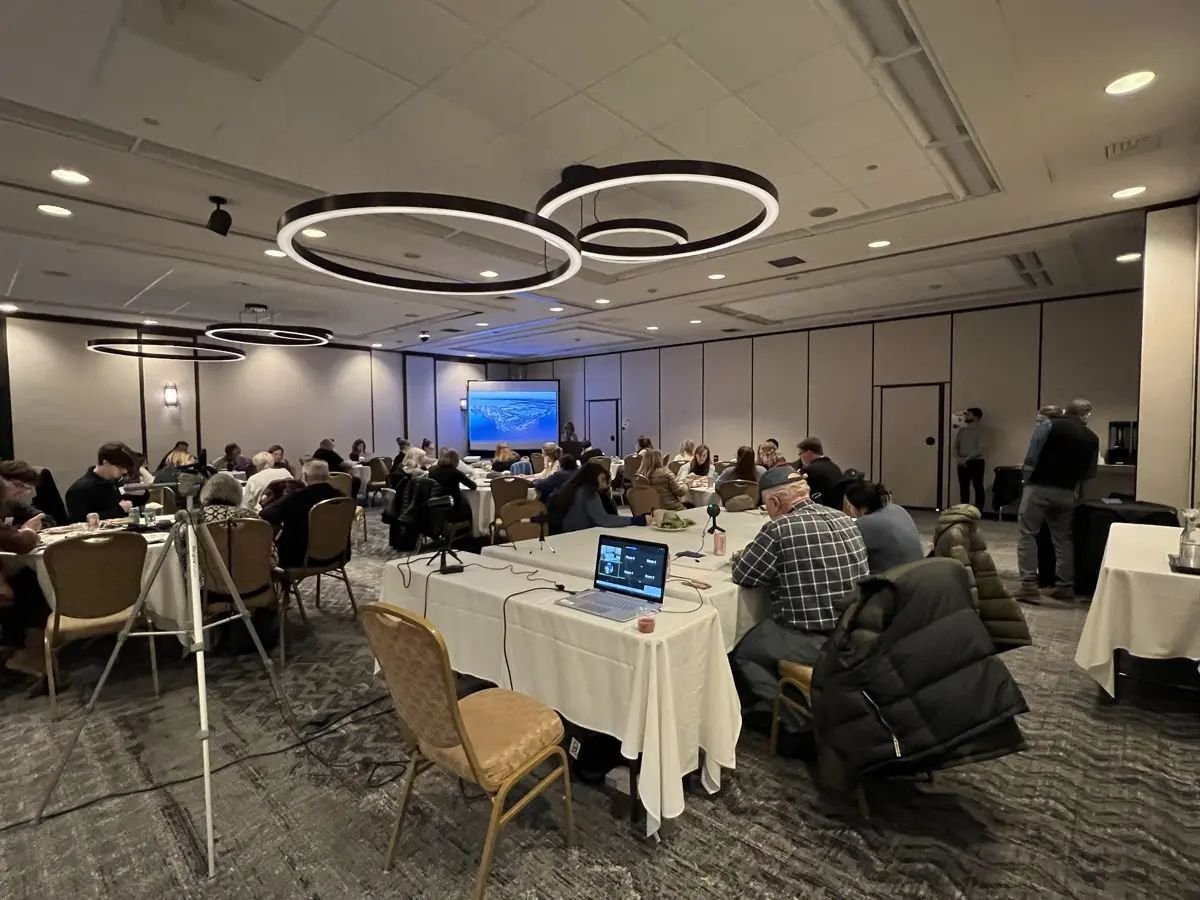
A jury focus group puts mock jurors in a room to hear your case and deliberate while your team watches on video. You see how real people react before trial or settlement talks. VTPrivateye has conducted 56+ jury focus groups for attorneys in Vermont, New York and New Hampshire. Amaia P., who holds a master's in forensic psychology, leads the jury research.
What happens in a jury focus group
A jury focus group is a research session in which mock jurors hear your case and deliberate, and your team watches how they reason. It lets you see the inside of a deliberation room before you are in front of a real jury. VTPrivateye runs these sessions for legal and corporate clients in Vermont, New York and New Hampshire, and we have conducted 56+ of them.
The results are useful for trial preparation and often for settlement. A group that struggles with your best argument, or fixes on a fact you underrated, tells you something no brief will.
When do attorneys use one?
Attorneys use a focus group in complex civil cases and in cases with a hard fact or a difficult client. It also helps before settlement talks, when each side needs a realistic read of how jurors may see the evidence. It helps you test your case theory and assess juror bias. It does not predict a verdict.
How do we run one?
We organize and run the sessions, so your team can focus on what the jurors say. Erin Miller Heins, Esq., of Langrock, Sperry & Wool, wrote that the whole event was “very well organized and run by VTPrivateye,” despite a complex case and setup.
- Define the questions. What do you need to learn: liability, damages, a witness, an opening?
- Run the deliberations. Jurors discuss and deliberate while your team observes by video. Participants are treated with care. Richard Rubin, Esq. noted that Susan Randall’s warmth and friendliness made all the participants happy to be part of the process.
Who takes part
It depends on the case. One, for a complex civil matter, included over 50 participants in 5 separate deliberation sessions with video observation. Erin Miller Heins, Esq. wrote that both local and out-of-state counsel were impressed with our professionalism and work product. Another, for Richard Rubin, Esq., had 24 jurors in 3 groups.
What do you receive?
Your team watches every session by video observation, and all sessions are recorded.
Who leads the work?
Amaia P. is a Lead Investigator and a native Vermonter. She holds a master’s in forensic psychology and brings a decade of professional experience on both coasts. Her specialties at VTPrivateye are jury research, trial support and focus groups. Susan Randall founded the firm, and one attorney has described her warmth with participants.
Jury research continues in the courtroom with juror research for voir dire, and our criminal and civil investigation team can work the case facts alongside it. Where we work: Vermont, New York and New Hampshire, with legal teams around the country on request. To plan a focus group, contact us.
Jury Focus Groups: common questions
What is a jury focus group?
A jury focus group is a session where mock jurors hear a presentation of the case and discuss it while counsel watches. It shows you which facts land, which arguments confuse people, and where jurors disagree. Attorneys use the results to refine strategy, and they can often be used in settlement talks. It is research, not a prediction of the verdict.
Is a mock jury the same as a focus group?
The terms overlap, and people use them differently. In general, a focus group is a guided discussion of a case or theme, while a mock jury hears a fuller presentation and deliberates as a jury would. We design each session around what you need to learn, so tell us the question and we will recommend the format. Either way, you watch the jurors work, and the sessions are recorded.
How many people take part?
It depends on the questions you need answered. For one complex civil matter we ran over 50 participants across 5 separate deliberation sessions. For another case we had 24 jurors in 3 groups, with video observation. More groups show you more reactions, but a smaller design can answer a narrower question. We plan the size with you.
What do attorneys get afterwards?
You see the deliberations as they happen, by video observation, and the sessions are recorded. Attorneys use what they learn to test a case theory, see how jurors weigh the evidence, and decide how to approach trial or settlement. What you take away at the end, such as recordings or written findings, is set per project, so agree on it with us at the start.
Related services
- Juror Research for Voir DireJuror research for voir dire is background and public social-media research on prospective jurors, done before jury selection so counsel can question and strike with facts.
- Day-in-the-Life Settlement VideosA Day-in-the-Life video is a short documentary film that shows how an injury changes one person's ordinary day.
- Criminal & Civil InvestigationA criminal defense investigator finds and documents the facts that bear on a case: witnesses, records, physical evidence and timelines.